

- By Admin
- 23 Nov, 2026
- Web Development
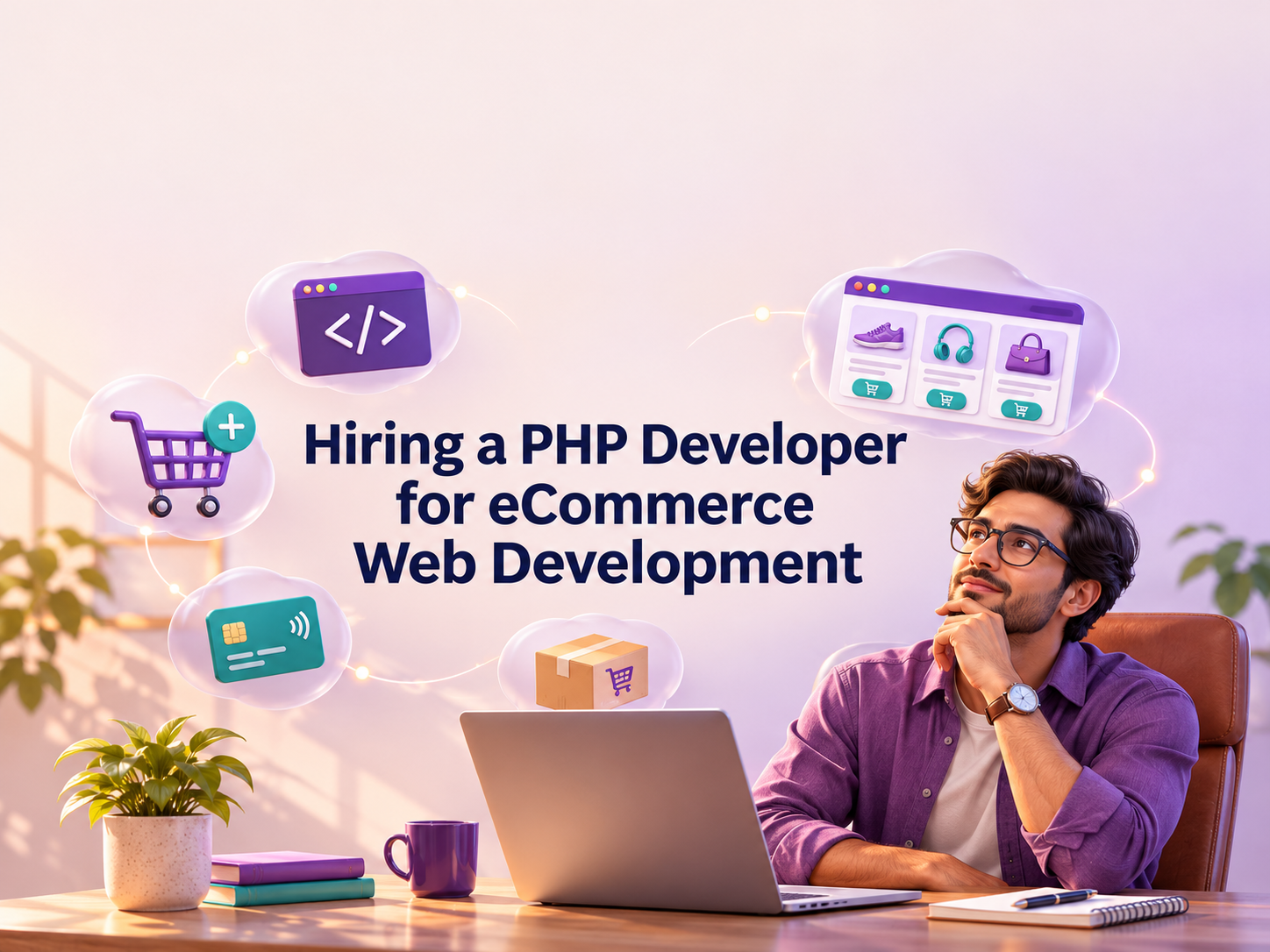
Hiring a PHP Developer for eCommerce Web Development: What Businesses Should Know
Hiring the right PHP developer can shape how effectively your eCommerce website supports sales, customer experience, and daily operations. From product management to checkout and integrations, every feature needs to work together reliably. A PHP Expert can help translate your business requirements into a practical development plan for building or improving your online store.
Before choosing a developer, look beyond coding skills. Consider their understanding of eCommerce workflows, approach to quality, and ability to support your website after launch.
1. Define Your eCommerce Requirements
Start by identifying what your business needs from the website. A clear scope helps developers estimate the work and reduces misunderstandings during development.
Your requirements might include:
- Product categories, variants, and inventory management
- Customer accounts and guest checkout
- Payment gateway and shipping integrations
- Discounts, coupons, and promotional offers
- Order tracking, returns, and refunds
- Connections with accounting, CRM, or ERP systems
Also clarify whether you need a new store, improvements to an existing website, or ongoing development support. Each requires a different level of discovery and planning.
2. Look for Relevant PHP and eCommerce Experience
General PHP knowledge is valuable, but eCommerce development involves connected business processes. A developer should understand how changes to pricing, stock, payments, and orders affect the customer journey.
Ask candidates to explain their role in previous projects. Reviewing a portfolio is useful, but understanding what they personally delivered gives you a clearer picture of their capabilities.
Discuss situations such as failed payments, stock shortages, cancelled orders, and refunds. Their answers can reveal how carefully they think through operational requirements.
3. Choose an Approach That Fits Your Business
A PHP developer may work with an existing eCommerce platform or build custom functionality using a framework. The appropriate approach depends on your workflows, budget, integrations, and future plans.
Ask the developer to explain:
- Why their proposed approach suits your requirements
- Which features need custom development
- How updates and maintenance will be handled
- What ongoing costs or third-party dependencies are involved
Avoid choosing technology based only on familiarity or popularity. Your team should be able to operate and maintain the resulting website effectively.
4. Discuss Security and Payment Handling
An eCommerce website handles customer information and commercially sensitive data. Security should be part of development planning from the beginning.
Discuss administrator permissions, input validation, dependency updates, backups, and how sensitive information will be handled. Ask how payment gateway integrations will be implemented and tested.
A developer should also explain how they will investigate failed transactions and prevent duplicate order processing. Clear handling of these scenarios helps reduce customer frustration and operational confusion.
5. Evaluate Performance and Mobile Usability
Customers need to browse products, select options, and complete purchases comfortably across devices.
Ask how the developer will assess page speed, database performance, image handling, and checkout usability. Testing should cover realistic product volumes and important customer journeys.
For example, a store with thousands of products may need careful attention to search, filtering, and catalogue navigation. Define performance expectations early so both sides understand what will be evaluated before launch.
6. Plan Integrations and Automation
Your store may need to exchange information with inventory tools, shipping providers, accounting software, or customer support systems.
Clarify which system owns each type of data and how integration failures will be handled. This helps avoid inconsistent stock levels or missing order updates.
AI integration may also support product discovery, customer enquiries, or content preparation. Introduce it where it addresses a clear business need, with appropriate data access and human review.
7. Agree on Delivery, Ownership, and Support
Before development begins, document milestones, responsibilities, acceptance criteria, and payment terms.
Confirm who owns the source code, where it will be stored, and what documentation you will receive. Your business should have appropriate access to hosting, domains, and essential service accounts.
Include testing, launch assistance, and post-launch support in the agreement. Compare proposals by scope and delivery quality as well as price.
Conclusion
Hiring a PHP developer for eCommerce web development requires a balanced review of technical ability, business understanding, and ongoing support. Clear requirements and agreed delivery expectations make proposals easier to compare. Working with a PHP Expert who understands your sales and operational workflows can help you build an online store that supports both customers and your team.
FAQs
What should I check before hiring a PHP developer for eCommerce?
Review relevant projects, PHP skills, integration experience, security practices, and communication. Confirm their responsibilities in previous work and agree on scope, ownership, testing, and support.
Can a PHP developer improve my existing eCommerce website?
Yes. Depending on your website’s condition and technology, a PHP developer can improve features, resolve issues, optimise performance, and connect business systems. An initial assessment helps define the work.
How much does PHP eCommerce development cost?
Costs depend on the scope, design, integrations, custom features, and condition of any existing website. Request an itemised proposal covering development, testing, launch, and ongoing support.
How long does it take to develop a PHP eCommerce website?
Timelines vary with complexity, content readiness, integrations, and feedback. Ask for a milestone-based schedule that includes discovery, development, testing, and launch.
Should I arrange ongoing support after launch?
Yes. Plan for updates, bug fixes, monitoring, backups, and integration changes. Agree on support hours, response expectations, responsibilities, and charges before launch.